NEWS
Adam Walsh, CEO of The John Good Group, joins us to talk about being a PhilCo
Adam Walsh | February 2026
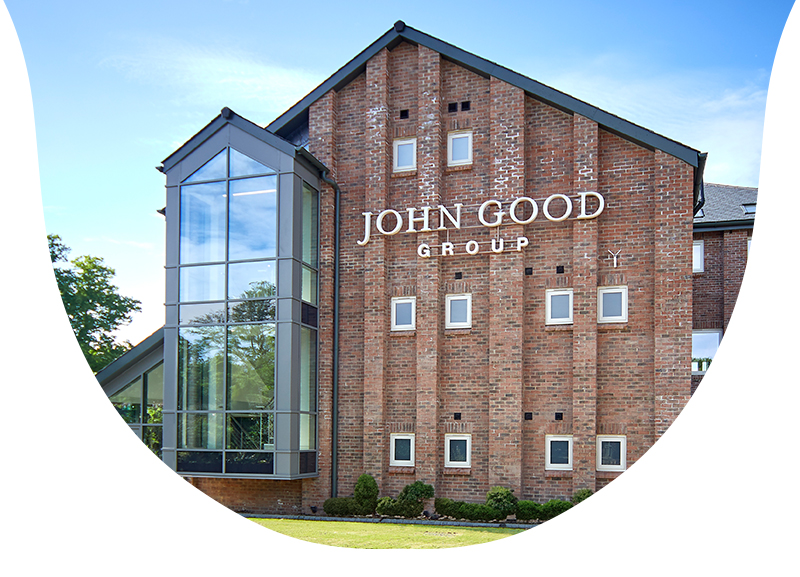
The John Good Group is a sixth-generation company that creates strategies and provides investment for performance, growth and enhances lives for long-term success, with a commitment to sustainability. The Matthew Good Foundation owns just over 17% of The John Good Group.
Adam Walsh, CEO of the John Good Group, shares his reflections about running a PhilCo.
What is a PhilCo and what does this look like for the John Good Group?
A PhilCo, or philanthropic company, is an organisation with more than 10% of its shareholding held by a charitable foundation. For the John Good Group, that’s the Matthew Good Foundation, which owns just over 17.5% of the shares in John Good and Sons Limited, our parent business. PhilCo’s have decided to embed social impact, charitable giving and, ultimately, philanthropic ambitions by giving a portion of their shareholding. Embedding that sort of impact within the organisation means the company is working for the charity. It also means the charity can have an influence over what goes on within the organisation.
What benefits have you seen to being a PhilCo?
Having the Matthew Good Foundation as an owner and a key player within the John Good Group has had several different benefits across a wide range of stakeholders. For my colleagues, particularly within the younger group, volunteering and charitable giving are now second nature, with the majority of people within the group doing some sort of charitable activity every single year. For our clients, it allows them to understand the values and where some of our profitability goes, and gives them a good sense of what we’re about within the group — the people, the culture and our values. For our suppliers, people want to work with good people, and we believe that by being a PhilCo and by demonstrating we put our money where our mouth is when it comes to our shareholding, we genuinely do this and it is a core part of our function within the group.
How does it impact on your values?
By putting social impact at the heart of the organisation, demonstrated by the fact that we have 17.5% of our shareholding held by the Matthew Good Foundation, we are truly demonstrating that using business for social good and having a positive impact on society and the environment is possible, and that we really live those values.
How does being a PhilCo affect how the business operates?
Putting philanthropy at the heart of the business and using our business as a genuine force for good is incredibly important to all of our stakeholders. It starts with the top, major shareholder Tim Good. It works through the board of directors, led by Stewart Oades, to myself and the wider executive team, and the whole of the John Good Group and our colleagues. Putting it right at the heart of the business in what we do gives us a different lens to think about our choices. So we think about our choices in terms of people, planet and performance. That means we’re thinking in a more fully rounded way about what our choices mean in terms of those three things, and whether we are able to deliver across all our ambitions while still delivering a bottom-line business. We believe as a PhilCo that these things work in harmony and don’t need to detract from one another. Profit can drive purpose and purpose can drive profit.
How can a business make the step from making donations to becoming a PhilCo?
That’s quite a lot about the model within the John Good Group, and about the PhilCo step that we’ve taken and the benefits of it. I’d start by saying, though, that any company that can make any positive impact through charitable giving, however the company is structured, is taking a really positive step. For any company that isn’t doing anything, just taking that first step — making donations, getting involved in a local charity — is incredibly important. For those that are already doing things and want to mature, push things forward or be more impactful, becoming a PhilCo is one of a number of different options you can think about utilising. We decided to take that route because we wanted to be transparent and open about it, and we wanted to make sure that the John Good Group became a force for good. That being said, other companies can take the same route and it is an example to follow. However, I would always challenge and say you need to do what is best for your business. As long as you can satisfy all stakeholders, including shareholders and colleagues, if you can make that extra difference for other people in your community through philanthropic giving, that is the place to start. If you want to professionalise, people like the John Good Group will be happy to speak to you about taking those next steps.
What impact does being a PhilCo have on the decisions you make as a business?
Balancing philanthropy and the underlying performance of the business is a careful act, and you need to make sure that you’re nurturing both along the same lines at the same time. It starts with good, solid and regular communication to all stakeholders so that everybody understands why you’re making the choices you are. After that, it’s about making sure that each part of the organisation is getting what it needs to grow. For the Matthew Good Foundation, that’s about providing a runway of donations that allows it to evolve, develop and become increasingly sustainable. By supporting that work with our time and expertise within the group, we allow and enable that organisation to do that. As a shareholder, the Matthew Good Foundation gives us a different lens to think about the choices that we make and the impact the business is having on the community and the environment. That gives us a slightly different challenge in terms of making sure we balance those competing demands.
How does being a PhilCo affect your organisational culture?
Whilst we’re now recognised as a PhilCo, I’d argue that we’ve always been a PhilCo. Social impact, doing better for the environment, and looking after our people and the communities in which we operate has always been right at the heart of the business we run, going back decades and even centuries. Recognition today as a PhilCo is an important step because it allows us to talk more clearly about some of the choices we’ve made, but that takes nothing away from the fact that philanthropy has run through this business from its core and its original roots all the way back to 1833. While that has taken many different guises over those years, today the Matthew Good Foundation, and the way our people act, and their values and behaviours, has been a constant throughout the business’s progression for the last few decades.
What advice would you have to business leaders considering the PhilCo model?
If I were ever asked by another chief executive exactly what I thought of the PhilCo movement and why it’s important, I would be a full advocate for looking at it and considering it within your organisation. It sends a clear message to all of your stakeholders that you are taking this incredibly seriously. By making the foundation a shareholder, you are making it a significant key player and stakeholder in the way that you think and make decisions within the business. That said, to any other chief executive I would always encourage you to think philanthropy first, whether you’re a PhilCo or not. There are significant benefits for your people, your suppliers and your customers by taking positive choices, engaging in the community and helping to tackle some of society and the environment’s biggest challenges. I am a massive fan of philanthropy. If you want to take the full step and go PhilCo, I think it’s a really positive experience. That said, the most important thing is making sure your business can be a force for good in the industries and communities you serve.
Thank you, Adam. To find out more about the John Good Group, please visit johngoodgroup.co.uk.